On September 11 Fullerton’s Planning Commission will consider an update to the city’s General Plan Housing Element, prepared earlier this year. The State of California’s Department of Housing and Community Development requires cities to periodically submit updates for review.
A history of the process used to develop this update is available on the city’s website. The Planning Commission’s agenda includes a link to the Draft Housing Element Update.
The purpose of the Housing Element is to provide direction for developing more housing within the city to meet expected population increases with a plan that accommodates all income levels.. With the city’s land more or less built out to the borders (with the notable exception of Coyote Hills), developers have been building multi-unit residential projects on former car dealerships, former factories, and other “urban infill” sites.
However, the authors of the draft Housing Element Update also contemplate increased density in other areas of the city, including older neighborhoods surrounding the downtown core. The paragraph below describes small properties on residential streets zoned R-2, R-3, etc., where multi-unit structures are allowed.

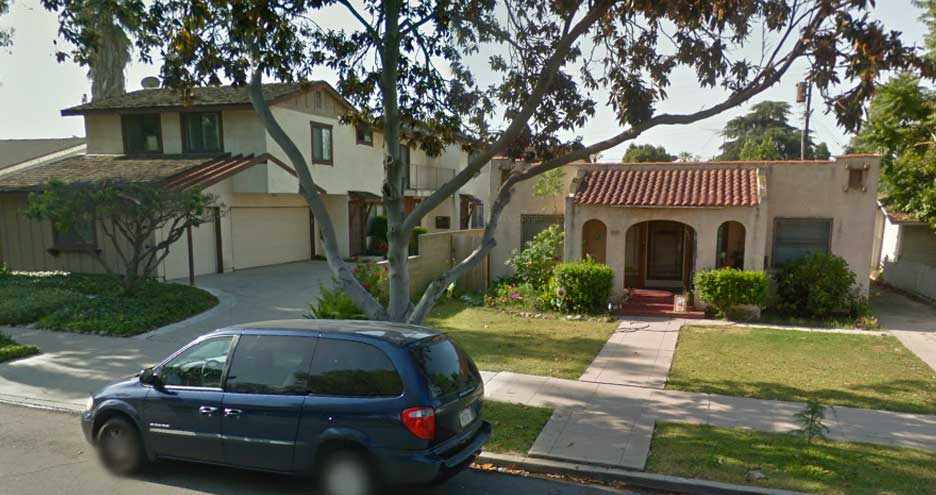
A house identified as an “underutilized parcel.”
“There are number of parcels within the City that are zoned for R-2, R-2P, R-3, or R-3R and are developed with fewer residential units than the maximum allowed by the specific zone. These underutilized parcels provide opportunities for units to be constructed in addition to the existing unit(s) or opportunities for redeveloping the entire site with a larger number of units (italics added). Table B-6 details these underutilized parcels and their capacities. The total development potential of these parcels is an additional 823 units.”
Table B-6 is a nine page appendix near the end of the document. Some of the identified homes are located within Residential Preservation Zones, where owners are allowed to build back-houses, as long as they conform to required architectural standards. Many of these houses, however, are just as old, dating as far back as the 1920’s, but are not protected by preservation district status. Instead, they are located near Fullerton College, or on the west side of downtown, which any reasonable person would recognize as historic. Although, some older housing on these streets has already been demolished in places, replaced by multi-unit mini-apartment buildings, interrupting the flow of craftsman-era homes.
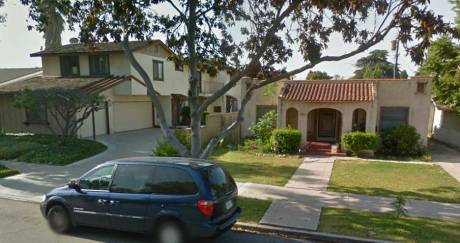
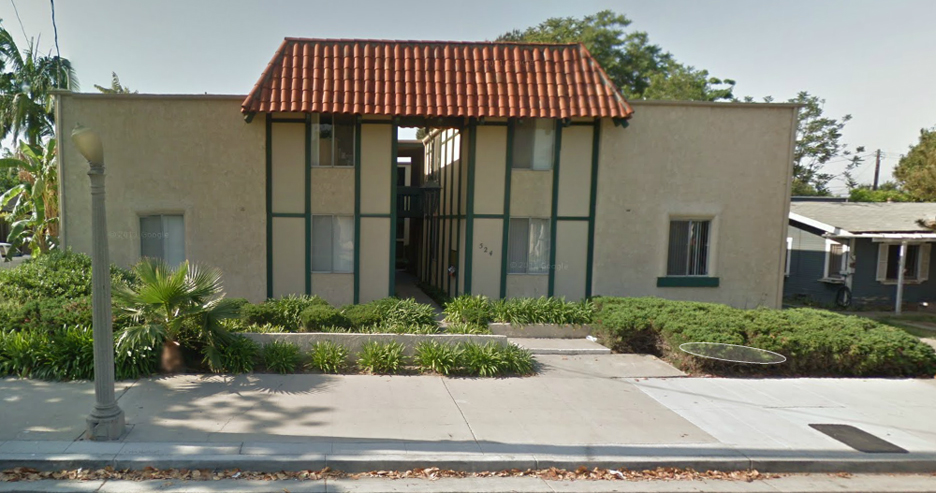
A typical example of multi-unit apartments built adjacent to an historic old home–and probably right on top of another one.
The authors attempt to reassure residents that historic structures are valued in a section entitled “Policy Action 2.1: Preservation of Historic Residential Resources.”
“The City values its historic residential resources. To ensure the continued preservation of historic residential structures, the City shall encourage the conservation, preservation and enhancement of the City’s historic residential neighborhoods. The City shall consult with organizations, such as Fullerton Heritage, and investigate the appropriateness and feasibility of additional General Plan policies that further encourage the preservation and enhancement of historic residential resources in the City…”
But the pages of properties identified as “underutilized” strongly suggests that “the City” would like to see increased density on these streets, and there is no distinction made between which properties might be able to handle a quaint “granny house” and which are ripe for demolition, in favor of “redeveloping the entire site.”
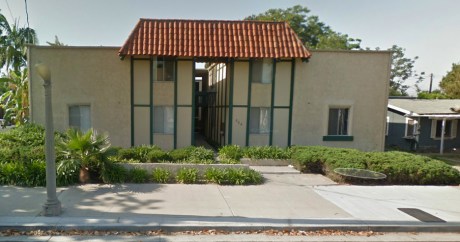
Does the City of Fullerton mean to encourage more buildings like this one? Note the 1920’s era craftsman home located next to it.
Inquiries to Fullerton Heritage, the city’s premiere local historical non-profit, were met with this reply: “It is not part of Fullerton Heritage’s Mission to have a position on a topic unless it affects the historical resources of our lovely city.”
Not very reassuring. Residents of Fullerton’s older neighborhoods should be very wary of any report that advocates for higher density without any explicit plan for protecting what is left of the city’s historic homes not already located in Residential Preservation Zones. The Planning Commission should reject this update to the Housing Element until such a plan is clearly delineated.



 fullertonrag.com