

The historic bench, and the water-sucking lawn behind it.
City crews are in the process of removing two venerable cypress trees in order to save an historic flagstone bench that has occupied the corner of Commonwealth and Highland for nearly 75 years. According to a recent Fullerton Tribune article the bench was constructed by Claude E. Steen Jr. in 1939 or 1940 as a resting place for people waiting for a bus. (The article simply states that the bus stop is now gone. The current stop is located just a few dozen feet to the West).
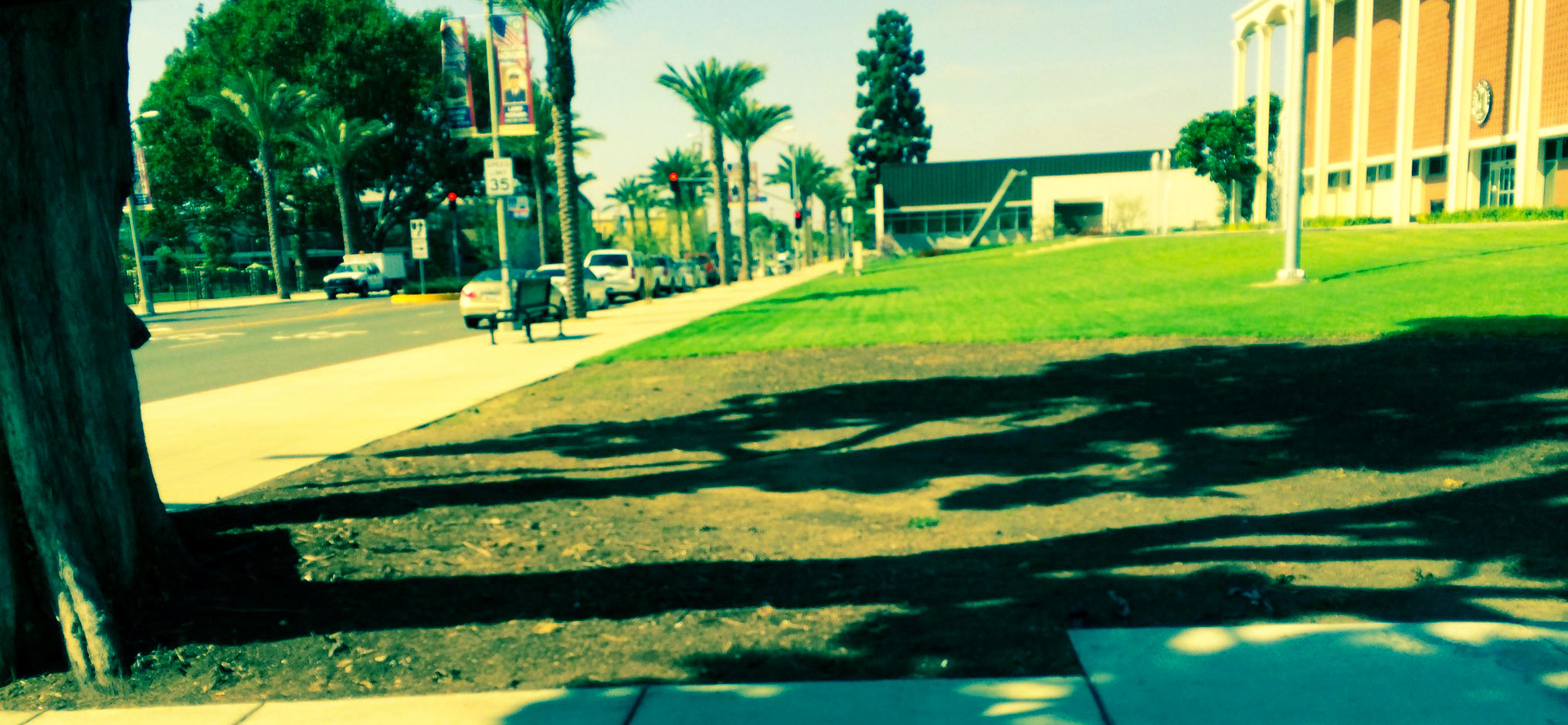
A good beginning. Now let’s see some California native plants covering the whole area.
The bench will be preserved, and the area around has been scraped clean of grass, evidently in preparation for some other kind of landscape or hardscape. But why stop there? We now live in a time of perpetual drought, yet the City of Fullerton maintains a water hungry lawn in front of City Hall. Although there are two fine demonstration gardens utilizing California native drought tolerant plants located in the parking lot behind City Hall (paid for by Fullerton Beautiful), the continuing maintenance of the large lawn facing Commonwealth Blvd. sends the message to homeowners that even though the city promotes programs to replace lawns with drought tolerant plants on its own website they’re not interested in making the switch themselves. Tearing out lawns and replacing them with plants that don’t require constant year round watering may be fine for homeowners, but not the government, it would appear.

Lawns were a sign of upper social status to show that a rich person had land they could waste on grass in places like England, where rain waters them naturally. Lawns don’t make much sense in our Mediterranean climate.

Looks fine behind City Hall, but what about the big lawn in front of it?
Unlike public parks, the front lawn of City Hall is not a place for scheduled, or even informal, recreational activities. Even protests tend to keep to the sidewalk, for the most part. There is no reason at this point to maintain a lawn that requires so much water when we could have a premiere California native plant landscape there instead. If they need advice, I’m sure the folks at the Fullerton Arboretum, where visitors can find dozens of beautiful native plants, would be glad to offer it.
The benefits of planting California native plants are fourfold (at least!):
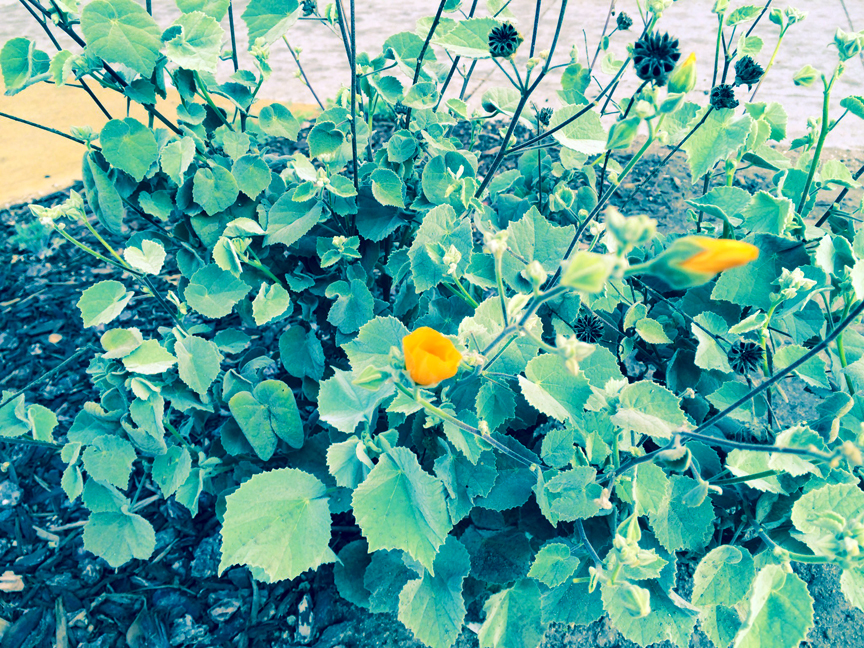
Not just a bunch of spiny succulents…
1. Water bills plummet. Plants species that have evolved to survive in our low water environment are by definition drought tolerant.
2. Planting natives helps to preserve species under threat of survival from development, and restore areas denuded of plants sometimes found nowhere else in the world. Let’s show some pride in California’s native landscape.
3. They’re not just succulents. There are lush, green ground covers, bushes, trees, shrubs and other plants that comprise our native plant eco-system. Anyone who has hiked in the local canyons or wilderness parks can tell you that no matter the time of year, there is always some plant in bloom.
4. They aid in the survival or our native fauna and pollinators. Native butterflies, bees, birds, lizards and other local animal life will benefit from the re-introduction of native plants.

Water with little more than rain.
The Tree of Life Nursery in San Juan Capistrano specializes in California natives. They are open year-round, but will hold a special sale to benefit the Orange County chapter of the California Native Plant Society this Saturday, March 8, between 9:00 a.m. and 4:00 p.m. The day will also feature the following free programs about making landscapes friendlier to native wildlife:
9:30 a.m. – Connie Beck – Attracting Songbirds, Butterflies and Hummingbirds to your Garden
10:30 a.m. – Will Johnson – Disappear your Water Bill with Drought Tolerant Native Plants!
11:30 a.m. – Jeremy Sison – Easy and Stunning Accent Plants: CA Native Dudleyas and Grasses
1:30 a.m. – Mike Evans – Ceanothus and Arctostaphylos: CA’s Iconic Evergreens

Good advice.
The Rag encourages Fullerton residents and our city government to show some pride in our native landscape and save on our water bills by replacing lawns with plants native to our region, and stop pouring precious water on the ground and money down the drain for the sake of dainty lawns.


 fullertonrag.com