Archives for category: Fullerton Heritage
bench

The historic bench, and the water-sucking lawn behind it.

City crews are in the process of removing two venerable cypress trees in order to save an historic flagstone bench that has occupied the corner of Commonwealth and Highland for nearly 75 years. According to a recent Fullerton Tribune article the bench was constructed by Claude E. Steen Jr. in 1939 or 1940 as a resting place for people waiting for a bus. (The article simply states that the bus stop is now gone. The current stop is located just a few dozen feet to the West).
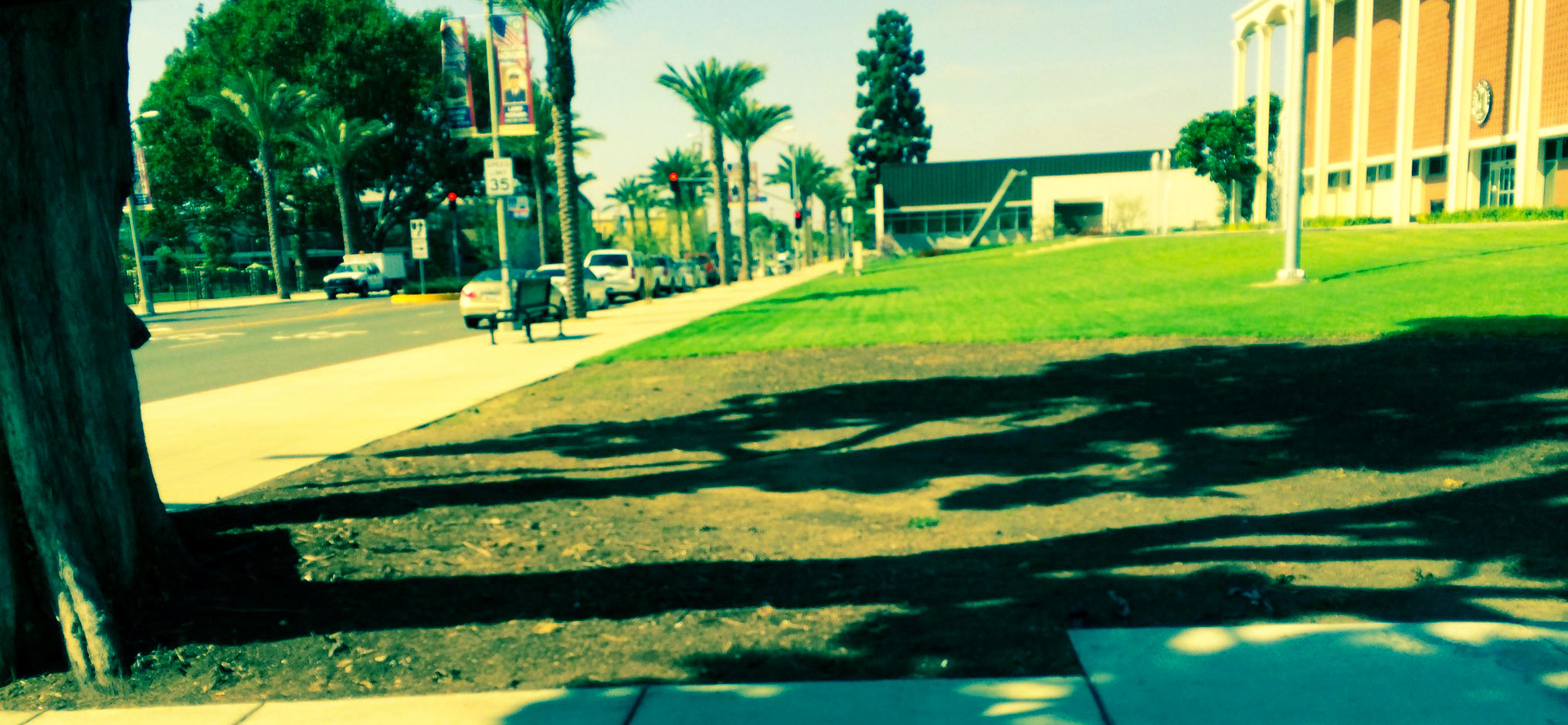
behindbench

A good beginning. Now let’s see some California native plants covering the whole area.

The bench will be preserved, and the area around has been scraped clean of grass, evidently in preparation for some other kind of landscape or hardscape. But why stop there? We now live in a time of perpetual drought, yet the City of Fullerton maintains a water hungry lawn in front of City Hall. Although there are two fine demonstration gardens utilizing California native drought tolerant plants located in the parking lot behind City Hall (paid for by Fullerton Beautiful), the continuing maintenance of the large lawn facing Commonwealth Blvd. sends the message to homeowners that even though the city promotes programs to replace lawns with drought tolerant plants on its own website they’re not interested in making the switch themselves. Tearing out lawns and replacing them with plants that don’t require constant year round watering may be fine for homeowners, but not the government, it would appear.

City Hall

Lawns were a sign of upper social status to show that a rich person had land they could waste on grass in places like England, where rain waters them naturally. Lawns don’t make much sense in our Mediterranean climate.

demo-garden

Looks fine behind City Hall, but what about the big lawn in front of it?

Unlike public parks, the front lawn of City Hall is not a place for scheduled, or even informal, recreational activities. Even protests tend to keep to the sidewalk, for the most part. There is no reason at this point to maintain a lawn that requires so much water when we could have a premiere California native plant landscape there instead. If they need advice, I’m sure the folks at the Fullerton Arboretum, where visitors can find dozens of beautiful native plants, would be glad to offer it.

The benefits of planting California native plants are fourfold (at least!):
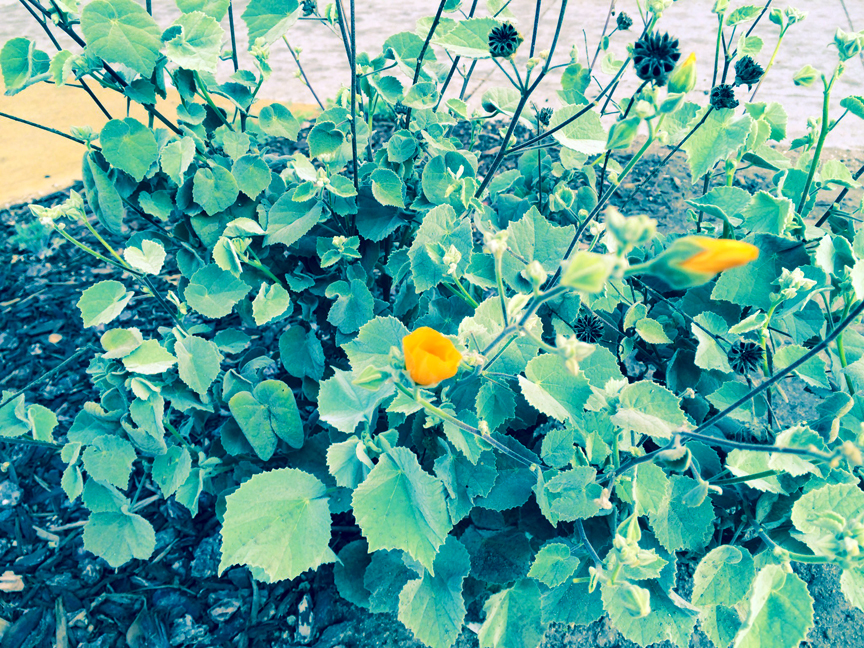
Mallow

Not just a bunch of spiny succulents…

1. Water bills plummet. Plants species that have evolved to survive in our low water environment are by definition drought tolerant.

2. Planting natives helps to preserve species under threat of survival from development, and restore areas denuded of plants sometimes found nowhere else in the world. Let’s show some pride in California’s native landscape.

3. They’re not just succulents. There are lush, green ground covers, bushes, trees, shrubs and other plants that comprise our native plant eco-system. Anyone who has hiked in the local canyons or wilderness parks can tell you that no matter the time of year, there is always some plant in bloom.

4. They aid in the survival or our native fauna and pollinators. Native butterflies, bees, birds, lizards and other local animal life will benefit from the re-introduction of native plants.

Water with little more than rain.

The Tree of Life Nursery in San Juan Capistrano specializes in California natives. They are open year-round, but will hold a special sale to benefit the Orange County chapter of the California Native Plant Society this Saturday, March 8, between 9:00 a.m. and 4:00 p.m. The day will also feature the following free programs about making landscapes friendlier to native wildlife:

9:30 a.m. – Connie Beck – Attracting Songbirds, Butterflies and Hummingbirds to your Garden

10:30 a.m. – Will Johnson – Disappear your Water Bill with Drought Tolerant Native Plants!

11:30 a.m. – Jeremy Sison – Easy and Stunning Accent Plants: CA Native Dudleyas and Grasses

1:30 a.m. – Mike Evans – Ceanothus and Arctostaphylos: CA’s Iconic Evergreens

LawKill

Good advice.

The Rag encourages Fullerton residents and our city government to show some pride in our native landscape and save on our water bills by replacing lawns with plants native to our region, and stop pouring precious water on the ground and money down the drain for the sake of dainty lawns.

On September 11 Fullerton’s Planning Commission will consider an update to the city’s General Plan Housing Element, prepared earlier this year. The State of California’s Department of Housing and Community Development requires cities to periodically submit updates for review.

A history of the process used to develop this update is available on the city’s website. The Planning Commission’s agenda includes a link to the Draft Housing Element Update.

The purpose of the Housing Element is to provide direction for developing more housing within the city to meet expected population increases with a plan that accommodates all income levels.. With the city’s land more or less built out to the borders (with the notable exception of Coyote Hills), developers have been building multi-unit residential projects on former car dealerships, former factories, and other “urban infill” sites.

However, the authors of the draft Housing Element Update also contemplate increased density in other areas of the city, including older neighborhoods surrounding the downtown core. The paragraph below describes small properties on residential streets zoned R-2, R-3, etc., where multi-unit structures are allowed.

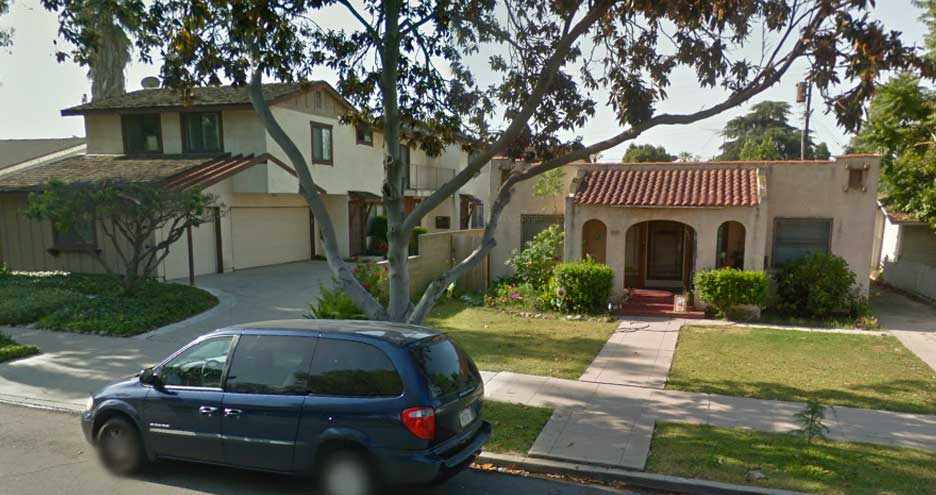
Double-Column-House

A house identified as an “underutilized parcel.”

“There are number of parcels within the City that are zoned for R-2, R-2P, R-3, or R-3R and are developed with fewer residential units than the maximum allowed by the specific zone. These underutilized parcels provide opportunities for units to be constructed in addition to the existing unit(s) or opportunities for redeveloping the entire site with a larger number of units (italics added). Table B-6 details these underutilized parcels and their capacities. The total development potential of these parcels is an additional 823 units.”

Table B-6 is a nine page appendix near the end of the document. Some of the identified homes are located within Residential Preservation Zones, where owners are allowed to build back-houses, as long as they conform to required architectural standards. Many of these houses, however, are just as old, dating as far back as the 1920’s, but are not protected by preservation district status. Instead, they are located near Fullerton College, or on the west side of downtown, which any reasonable person would recognize as historic. Although, some older housing on these streets has already been demolished in places, replaced by multi-unit mini-apartment buildings, interrupting the flow of craftsman-era homes.

Mixed-Street

A typical example of multi-unit apartments built adjacent to an historic old home–and probably right on top of another one.

The authors attempt to reassure residents that historic structures are valued in a section entitled “Policy Action 2.1: Preservation of Historic Residential Resources.”

“The City values its historic residential resources. To ensure the continued preservation of historic residential structures, the City shall encourage the conservation, preservation and enhancement of the City’s historic residential neighborhoods. The City shall consult with organizations, such as Fullerton Heritage, and investigate the appropriateness and feasibility of additional General Plan policies that further encourage the preservation and enhancement of historic residential resources in the City…”

But the pages of properties identified as “underutilized” strongly suggests that “the City” would like to see increased density on these streets, and there is no distinction made between which properties might be able to handle a quaint “granny house” and which are ripe for demolition, in favor of “redeveloping the entire site.”

Atrocity 1

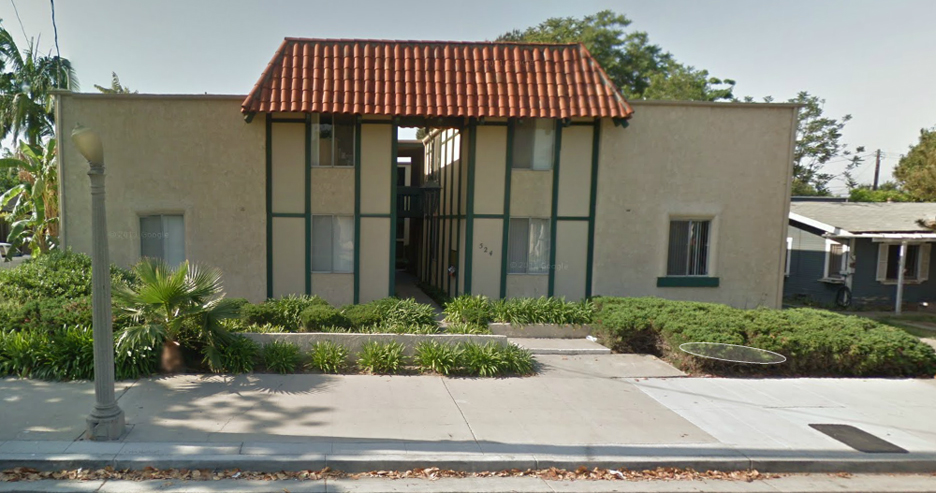
Does the City of Fullerton mean to encourage more buildings like this one? Note the 1920’s era craftsman home located next to it.

Inquiries to Fullerton Heritage, the city’s premiere local historical non-profit, were met with this reply: “It is not part of Fullerton Heritage’s Mission to have a position on a topic unless it affects the historical resources of our lovely city.”

Not very reassuring. Residents of Fullerton’s older neighborhoods should be very wary of any report that advocates for higher density without any explicit plan for protecting what is left of the city’s historic homes not already located in Residential Preservation Zones. The Planning Commission should reject this update to the Housing Element until such a plan is clearly delineated.